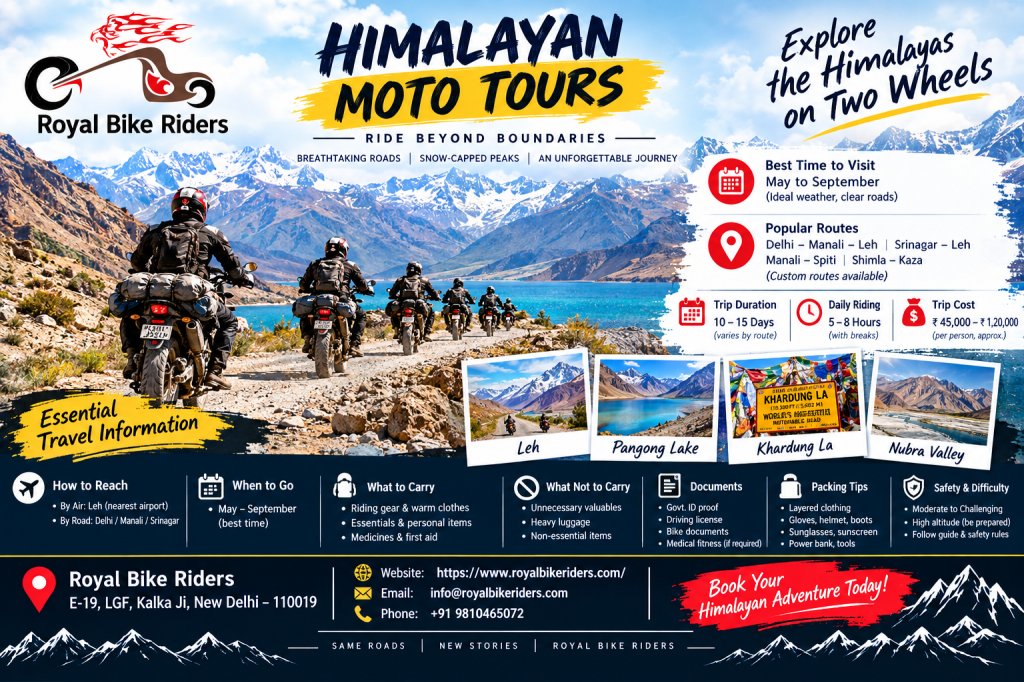
The Himalayas are not a place you simply visit. You ride into them slowly, one climb at a time. The air thins, the villages get smaller, and the horizon fills with snow-capped ridgelines that seem to belong to another planet. For riders who want to experience that on two wheels, Himalayan Moto Tours offer one of the most rewarding ways to do it.
This guide walks you through everything worth knowing before you go: why the region draws motorcyclists, which routes and places matter, how to prepare, and where a guided operator like Royal Bike Riders fits into the picture.
Why Choose Himalayan Moto Tours?
Plenty of destinations have good roads. The Himalayas have roads that feel like part of the landscape itself. They cut across cliff faces, follow glacial rivers and climb through passes that sit above 5,000 metres. A motorcycle lets you feel every change in temperature, gradient and scenery in a way a car window never will.
There are practical reasons to choose an organised tour over going alone:
- Remote stretches are real. Fuel stops, repair shops and food can be far apart.
- Local knowledge matters. Road captains know where the surface deteriorates and how to read the weather.
- Paperwork gets simpler. Permits and accommodation are far easier to manage with a team behind you.
- Riding in a group is safer. If something goes wrong, help is close by.
Beyond logistics, there is the experience itself. Riding in a group of like-minded people, sharing a hot meal after a cold day on the road, is a big part of why riders return year after year.
Best Time for Himalayan Motorcycle Tours
The Himalayan riding season is short and shaped by snow. Most high passes open by late spring and close again as winter approaches.
Late May to June brings cool mornings and clear views, though patches of snow may remain on higher roads.
July and August are monsoon months in the lower Himalayan belt, where landslides can disrupt roads. Trans-Himalayan areas such as Ladakh and Spiti sit in a rain shadow and are generally drier.
September to early October often provides settled weather, golden light and thinner crowds, though nights get very cold at altitude.
Because opening dates vary each year, treat any schedule as a plan rather than a promise. A good operator builds flexibility into the itinerary.
Popular Routes for a Motorcycle Tour to the Himalayas
The Himalayas stretch across several Indian states and regions, so the route you choose shapes the whole trip.
Ladakh Circuits
Ladakh is the classic choice. Riders typically combine Leh with Nubra Valley and Pangong Lake, arriving via Manali or Srinagar. It offers the most famous high passes and the widest range of scenery.
Spiti Valley
Spiti is quieter and rawer. Expect narrow roads, ancient monasteries and villages sitting at extreme altitude. It is best for riders who enjoy remote landscapes and don’t mind rougher surfaces.
Kashmir and Himachal
Green valleys, pine forests and river gorges make these regions ideal for riders who want variety and gentler altitude gain before heading higher.
High-Altitude Expeditions
Royal Bike Riders runs several Himalayan itineraries, including the Umling La ride at 5,798 metres, the World Highest Ride in the Himalayas, Ride High Through Little Tibet, the Trans-Himalaya Adventure Ride and Rediscover Himalaya on Royal Enfield. Each differs in duration and difficulty, so riders can match a tour to their experience.
Landscapes and Places Worth Stopping For
Some places simply deserve time off the bike.
- Leh: A good base for acclimatisation, with old-town lanes, a palace and nearby monasteries.
- Nubra Valley: Sand dunes surrounded by snow peaks, an unlikely and memorable contrast.
- Pangong Lake: A long, high-altitude lake whose colour shifts through the day.
- Kaza and Key Monastery (Spiti): A hillside monastery overlooking a wide, barren valley.
- Chandratal: A crescent-shaped lake reached in the warmer months, popular for camping.
- Kunzum La: A high pass connecting Spiti and Lahaul, with prayer flags and sweeping views.
Leave room in your schedule for unplanned stops. Some of the best moments happen when a road opens onto a view nobody warned you about.
Motorcycle and Rider Requirements
Himalayan motorcycle tours are demanding, but they don’t require professional skills. What they do require is honesty about your ability.
Riding skill. You should be comfortable with a manual gearbox, riding for several hours a day and handling gravel, water crossings and uneven tarmac.
Physical fitness. Long days at altitude drain energy. Regular cardio and strength training before you leave will help more than you’d expect.
The motorcycle. Rugged, torque-friendly bikes with good ground clearance are the norm on these routes. Royal Enfields are common because they are simple to maintain and widely understood by mechanics in the mountains. Royal Bike Riders prepares its bikes for high-altitude and rough terrain, so you start each day with a machine that has been checked.
Mindset. Patience matters more than speed. Riders who accept slow progress and changing plans tend to enjoy the trip most.
Permits and Documents
Paperwork varies by region and nationality, and rules change, so always verify current requirements before you book.
- Valid motorcycle licence accepted in India, plus an International Driving Permit if applicable
- Passport and valid Indian visa for foreign travellers, or government photo ID for Indian nationals
- Inner Line Permits or Protected Area Permits for restricted zones such as certain parts of Ladakh
- Travel insurance covering adventure activity and high-altitude travel
- Vehicle documents if you are riding your own motorcycle
Carry printed copies and keep digital versions on your phone. Checkpoints can appear in remote places, and having everything organised saves time.
High-Altitude and Weather Considerations
Altitude is the defining challenge of any Himalayan adventure. Above roughly 3,000 metres, your body works harder to get oxygen, and pushing too fast is the most common reason trips go wrong.
- Acclimatise before you climb. Spend a couple of easy days at a moderate altitude before crossing high passes.
- Watch for symptoms. Headache, nausea, dizziness and unusual fatigue are warning signs. Don’t ignore them.
- Hydrate and eat regularly. Even if you don’t feel thirsty, drink often.
- Descend if symptoms worsen. Going lower is the most effective response to serious altitude illness.
Weather can turn quickly. A clear morning may give way to hail, snow or high wind by afternoon, and streams can swell as glaciers melt during the day. Starting early usually gives you the most stable conditions, and a flexible itinerary can turn a potential crisis into a minor delay.
What to Pack for Himalayan Moto Tours
Temperatures can swing dramatically in a single day, so layering is your best strategy.
Riding gear
- Certified helmet, armoured jacket and trousers
- Waterproof riding boots and gloves suitable for cold mornings
- Rain layer that fits over your jacket
Clothing
- Thermal base layers, fleece and windproof outer layer
- Warm socks, neck gaiter or balaclava
- UV-protective sunglasses
Essentials
- High-SPF sunscreen and lip balm
- Personal medication and a small first-aid kit
- Power bank, torch and reusable water bottle
- Some cash, as card facilities are limited in remote areas
Royal Bike Riders provides a riding kit guide, so you can plan what to bring and what to arrange in advance.
Safety Tips for Riding in the Himalayas
- Ride your own pace. Mountain roads punish overconfidence.
- Keep a safe gap. Dust, gravel and sudden stops make close following risky.
- Follow your road captain. Their route advice is based on repeated experience.
- Check the bike daily. Tyres, brakes, chain and oil take minutes to inspect.
- Avoid riding after dark. Visibility, temperature and road hazards all get worse.
- Take rest days seriously. Fatigue and altitude combine to slow reactions.
- Respect local customs. Move around monasteries and villages quietly and considerately.
How to Plan Your Himalayan Moto Tour
A little preparation goes a long way.
- Pick your region and season based on the experience you want.
- Choose a tour length that leaves time for acclimatisation and buffer days.
- Decide between guided and independent travel. Guided options include accommodation, meals, permits and support vehicles.
- Sort your documents early, especially permits and insurance.
- Train physically with cardio and a few long practice rides.
- Book flexible travel where possible, since weather can shift schedules.
- Pack light and prioritise quality layers over quantity.
Why Choose Royal Bike Riders?
Royal Bike Riders organises motorcycle tours across the Himalayas and other parts of India, with a focus on making demanding routes manageable. Riders can expect:
- Planned itineraries covering routes, accommodation and meals
- Suitable motorcycles prepared for altitude and rough roads
- Experienced road captains who lead and support the group
- On-road backup, including technical assistance and a support vehicle
- A range of tours from shorter rides to high-altitude expeditions
- A community of riders who share the same love of adventure
You can look through current tours and departure dates on the Royal Bike Riders.
Conclusion
Himalayan Moto Tours are about far more than distance covered. They are a mix of preparation, patience and wonder, set against some of the most spectacular scenery on the planet. Choose your season carefully, respect the altitude, carry the right paperwork and pack for every kind of weather. With an experienced team like Royal Bike Riders handling the logistics, you are free to concentrate on the ride itself and the mountains rising around you.
Frequently Asked Questions
1. What are Himalayan Moto Tours?
They are guided motorcycle journeys through the Himalayan region, usually covering high passes, remote valleys and cultural sites with support from experienced riders and vehicles.
2. When is the best time for Himalayan motorcycle tours?
Late May to early October is generally the riding window. Exact road conditions vary each year, so check before you finalise your dates.
3. Are Himalayan motorcycle tours suitable for beginners?
They suit riders with basic experience and good fitness. Complete beginners should build skills on easier roads first.
4. Which bike is best for a motorcycle tour to the Himalayas?
Reliable, high-clearance bikes are the usual choice. Royal Enfields are popular because they are easy to maintain and well understood by mountain mechanics.
5. Do I need permits for a Himalayan motorcycle adventure?
Some areas, particularly in Ladakh, require permits. Confirm current rules or let your tour operator handle them.
6. How can I prevent altitude sickness on a Himalayan ride?
Acclimatise gradually, drink plenty of water, avoid alcohol early on and rest when needed. Seek medical help if symptoms persist or worsen.
7. How many days should I allow for a Himalaya motorcycle tour?
Most riders choose ten to fifteen days, which gives room for acclimatisation, sightseeing and unexpected delays.
8. Can foreign riders join Himalayan Moto Tours?
Yes, provided they have a valid passport, Indian visa, suitable licence and the required permits. Check the latest requirements before travelling.
9. What should I wear for a Himalayan ride?
Wear layers: thermal base, fleece and a windproof, waterproof shell, along with certified riding gear, warm gloves and UV-protective eyewear.
10. Why book Himalayan Moto Tours with Royal Bike Riders?
Royal Bike Riders provides planned itineraries, suitable motorcycles, road captains and on-road support, which lets riders focus on the experience rather than the logistics.
Royal Bike Riders
E-19, LGF, Kalka Ji, New Delhi – 110019
Website: https://www.royalbikeriders.com/
Email: info@royalbikeriders.com
Phone : +91 9810465072

